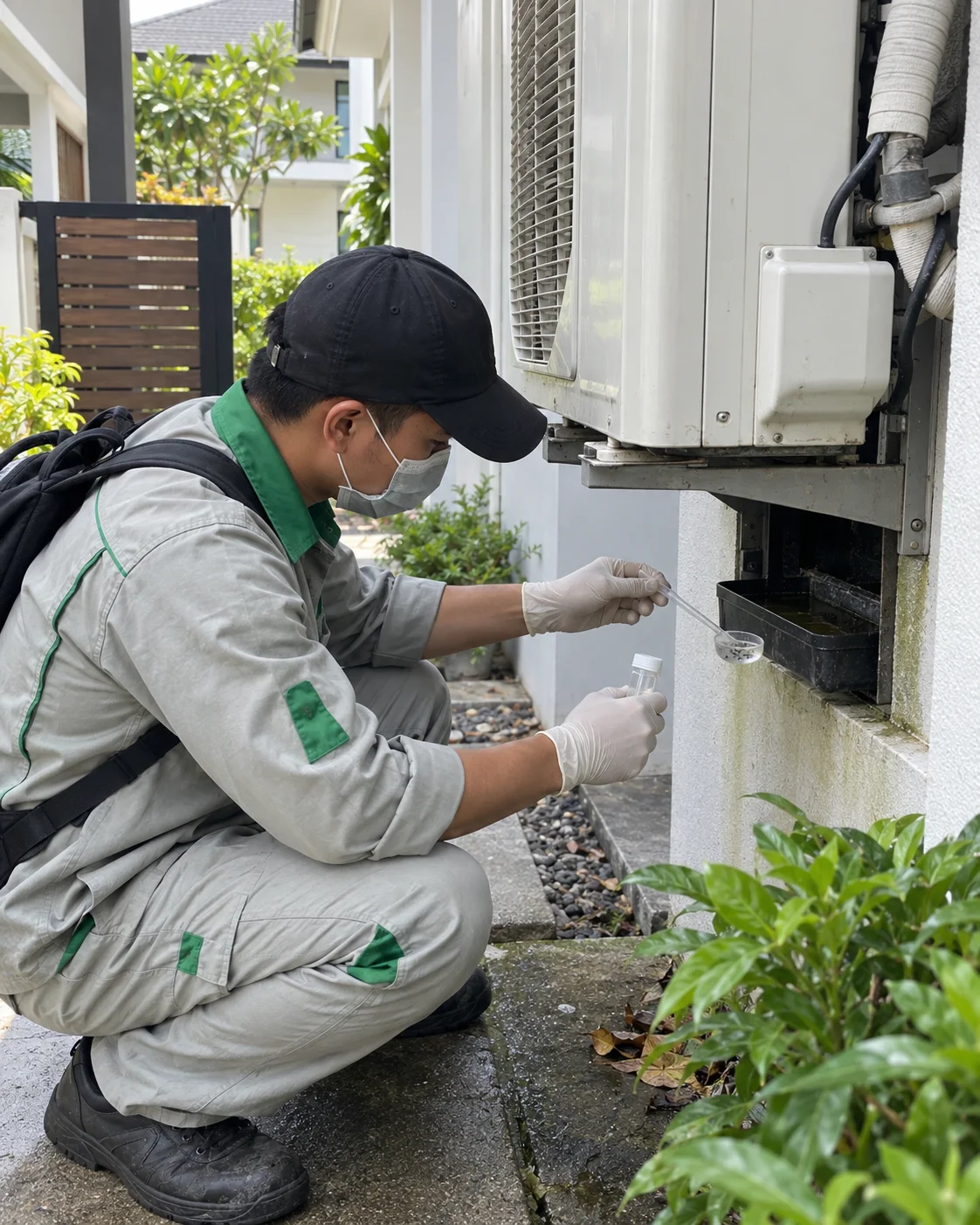
When a Second Opinion Is Worth Paying For
Paying somebody to look at a problem you are already paying somebody else to solve feels like waste. In a small number of situations it is the cheapest decision available, and in most others it simply buys you the same information twice.
These are the four cases where it is worth doing, and the ones where it is not.
One: the recommendation is expensive and hard to reverse
A proposal to drill and inject a termite barrier around a villa, to strip and replace built-in furniture, to fumigate a warehouse, or to heat-treat a whole floor of a hotel. These are large, disruptive and difficult to undo.
The cost of an independent inspection is a small fraction of any of them, and the second opinion sometimes changes the scope substantially rather than confirming it. Where two independent inspections agree, you also proceed with far more confidence.
Two: three treatments have not worked
After three failed visits, the issue is very rarely the product. It is usually that the harbourage has not been found, that the source is outside the treated area, or that the aftercare is removing the treatment.
A fresh pair of eyes with no investment in the previous diagnosis is worth more at that point than a fourth application. Ask specifically for an inspection rather than a treatment, and ask for a written finding on where the population is.
Three: there is money at stake in a dispute
A deposit being withheld, a landlord and tenant disagreeing about responsibility, a building declining a problem, a supplier disputing a rejected delivery. In each case what you need is not a treatment but a dated, independent document describing what is there and what caused it.
That report converts an exchange of opinions into evidence, and it usually costs less than the sum being argued over.
Four: you are about to sign something long
Buying a house, taking a villa on a three-year lease, or signing an annual commercial contract. An independent inspection before signing gives you a baseline you can point to later, and occasionally finds something that changes the price.
For ground-contact property in southern Vietnam, a termite inspection before a long commitment is one of the few genuinely reliable pieces of advice in this field.
When it is not worth it
- A routine treatment that is still within its normal timeline. Bait takes two weeks; judging it at day four and calling somebody else buys nothing.
- A small, clearly identified household problem where the diagnosis is not in doubt.
- When you have not yet asked the first company the four obvious questions — where is the harbourage, what was applied, what was cleaned, was there a follow-up.
- To find a cheaper price for the same job, which is a quotation exercise rather than a second opinion.
There is a fifth case that comes up regularly with international companies here. Where a head office or an insurer requires an independent verification of a supplier, the second opinion is not about doubting the contractor at all — it is a governance requirement, and it is much easier to arrange as a planned annual inspection than as a reaction to an incident. Framing it that way also avoids damaging a working relationship with an incumbent.
How to get a useful one
Ask for an inspection with a written report, and say plainly that you do not want a quotation attached. That distinction matters: a company sent to inspect a competitor\x27s work while hoping to win the contract has an obvious incentive, and taking the sales question off the table produces a better document.
Do not tell them the first diagnosis before they have looked. Give them the history — what you saw, where, when — and let the finding be independent. Then compare.
Related reading
See comparing two proposals fairly and how to choose a company. On failure, why pests come back and resistance. For disputes, insurance, deposits and pest damage. Our parent company issues independent Vietnamese-language inspection reports through its service programmes.
Global Pest Control is the English-language arm of Khử Trùng Toàn Cầu. We will carry out an inspection-only visit and issue a report with no quotation attached if that is what you need.
Common questions
Will a second company be honest about a competitor\x27s work?
More often than you might expect, particularly if you remove the incentive by asking for inspection only. What is worth watching for is a report that criticises everything and recommends a much larger job, which is a sales pattern rather than a finding. A useful second opinion is usually specific and partly agrees with the first.
How much should an inspection-only visit cost?
Considerably less than a treatment, and any established company here will quote it separately. If a company will only inspect on the condition that it also treats, that is worth noting — it means the inspection is a sales visit rather than a service.
Should I tell the first company I am getting a second opinion?
Usually yes, and a good one will not object; several will offer to attend jointly, which is often the fastest route to resolution. Where a company reacts badly to the suggestion, you have learned something useful about how the rest of the relationship would go.