Waterside Properties: Canals, Channels and Tides
Ho Chi Minh City is built on a river delta and threaded with canals and drainage channels, and a great deal of the property foreign residents rent — in Thao Dien, An Phu, District 7 and Binh Thanh — sits close to one.
The view is genuinely worth having. It also changes the pest profile in ways that are predictable and mostly manageable.
Mosquitoes, but a different mix
Waterside sites support Culex species strongly, because those breed in larger bodies of organically rich standing water rather than in small clean containers. That means more night biting, and it means the source may be a channel rather than anything on your property.
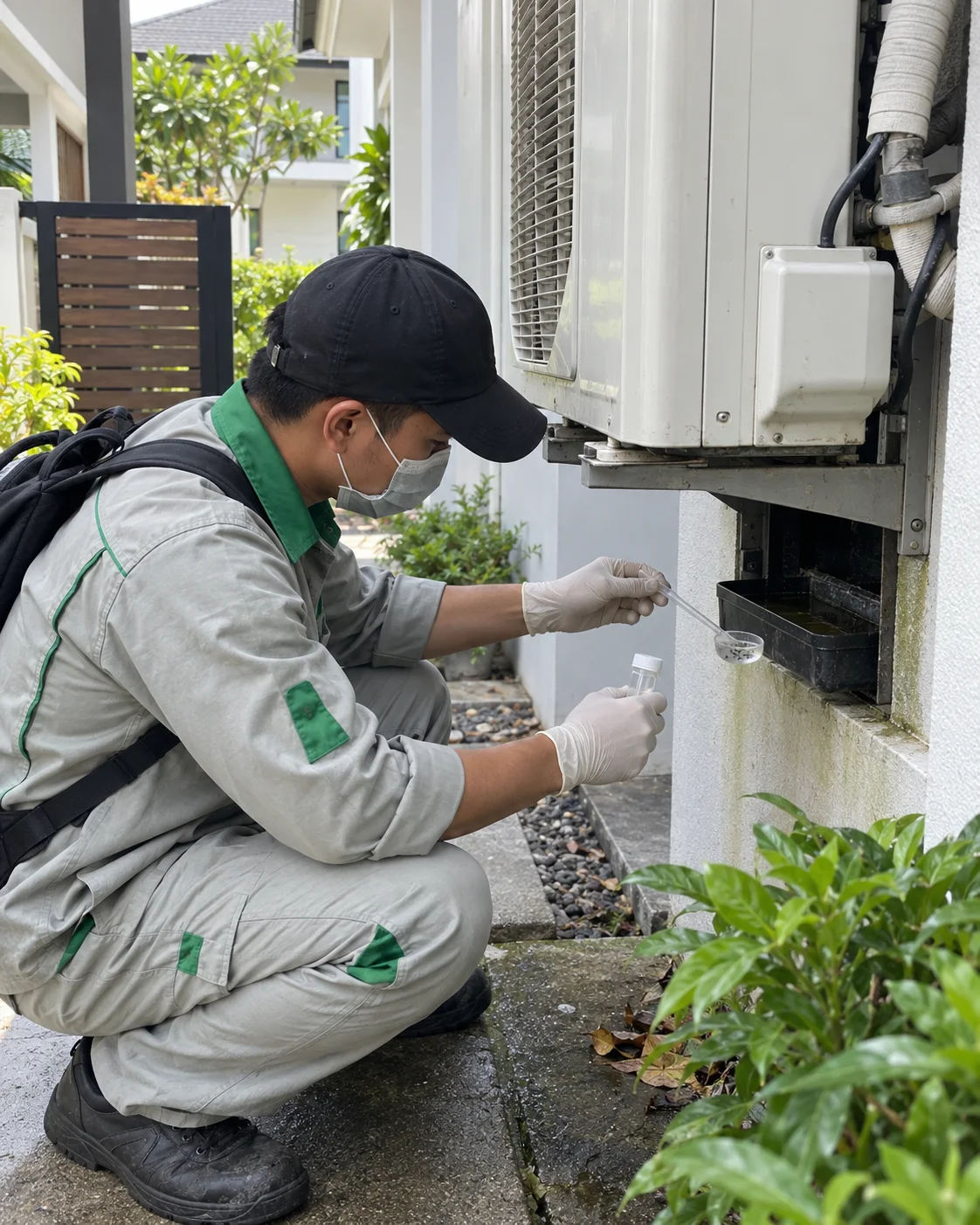
Aedes, the daytime species that carries dengue, still breeds in containers on your balcony regardless of the water outside. Both need attention and the measures are different, which is why identifying which one is biting you matters.
The tidal effect
Much of the city\x27s canal network is tidal, and drainage discharges into it. On a high tide, particularly a spring tide, discharge slows or reverses and the drainage system backs up. That is why low-lying streets flood on clear days.
For a property connected to that system it means periodic surging, blown water seals, and backflow that pushes drainage-dwelling cockroaches upward into buildings. If your building floods on a sunny afternoon, that is the tide rather than the weather, and it happens on a predictable monthly cycle.
Rodents along the bank
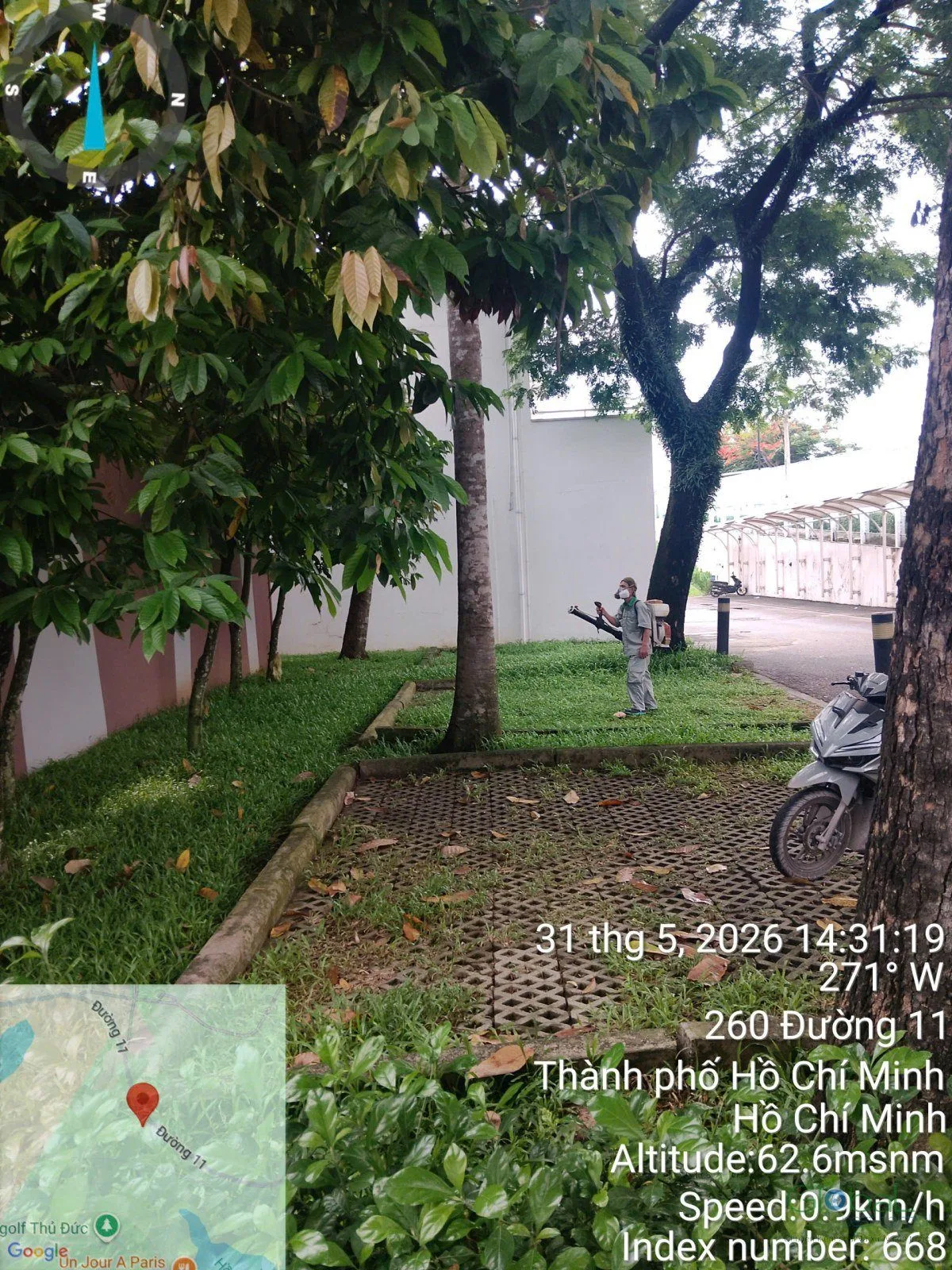
Canal banks, vegetation strips and the voids in bank revetments support rodent populations continuously. They are also a corridor, so a canal is effectively a linear highway running past every property along it.
The practical consequence is that a waterside property needs external perimeter control as a permanent feature rather than as a response to a problem, in the way an inland property often does not.
Vegetation and what lives in it
Bank vegetation, water hyacinth mats and overhanging trees support snakes, which occasionally enter gardens and ground-floor properties, and support large populations of insects that draw in geckos and spiders.
Most of this is benign and part of living near water. What is worth managing is anything that bridges from the bank vegetation to the building — an overhanging branch, a dense shrub against a wall, a boundary fence with planting growing through it.
Humidity, which is higher
Waterside property runs at consistently higher humidity than the same building inland, which matters for mould, silverfish, booklice and the general damp problems of the rainy season. Wardrobes on external walls, closed rooms and stored paper all need more attention here.
A dehumidifier is a more worthwhile purchase in a canal-side apartment than in an equivalent inland one.
What to do
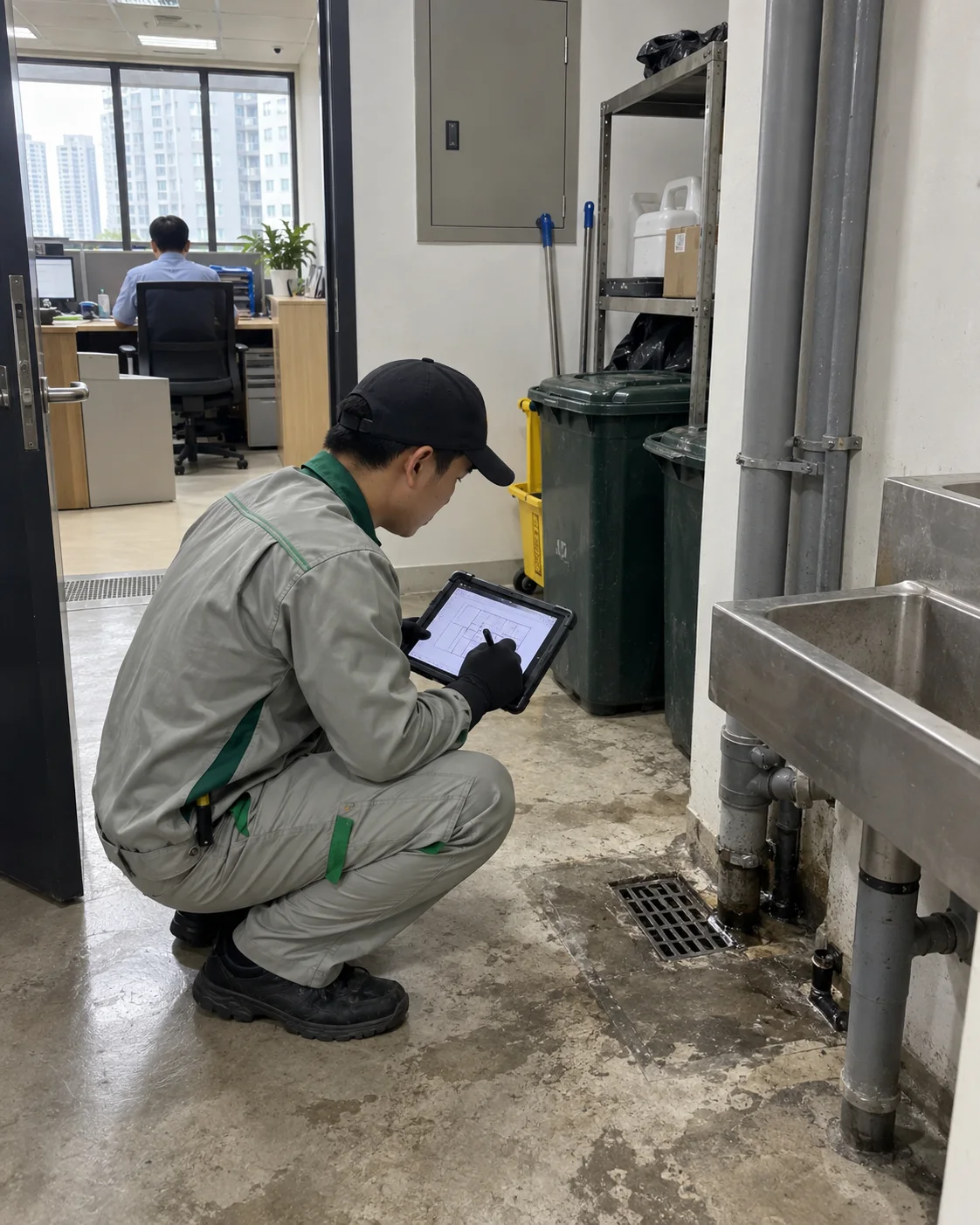
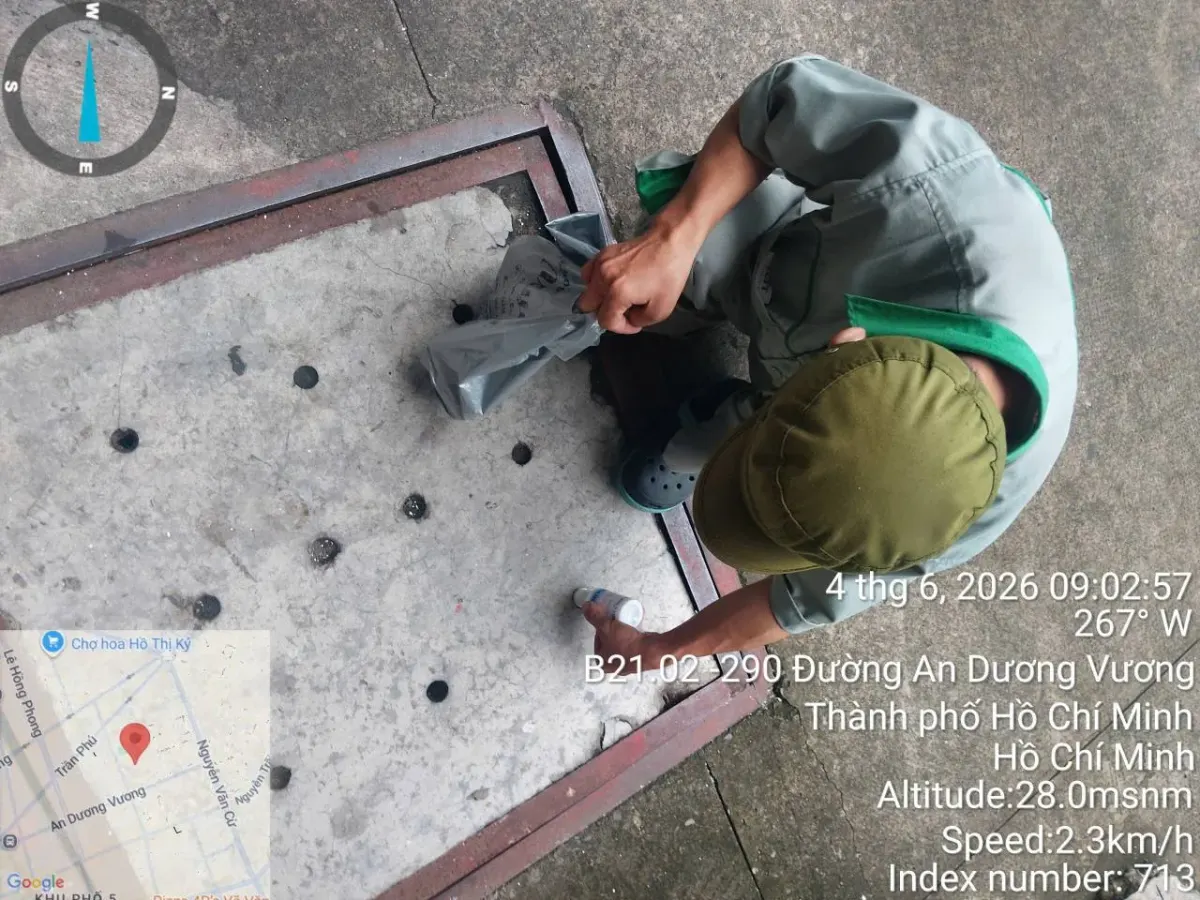
Treat the perimeter as a permanent element: external monitoring, sealed thresholds, brush strips, and a clear strip between planting and the building. Fit one-way inserts to floor drains, because tidal backflow is a real mechanism here rather than a theoretical one.
Keep containers empty weekly regardless of the water outside, since the daytime mosquito that matters most is still breeding on your balcony. And screen the openings you actually use in the evening.
Ground movement is the other waterside factor and it is rarely discussed in pest terms. Delta soil settles, and settlement opens cracks in slabs, terraces and drainage runs over years. Those cracks are entry points, and they are also why waterside buildings tend to develop drainage defects earlier than equivalent buildings on firmer ground.
What is not worth doing
Trying to control the canal. Fogging the bank achieves a few hours of relief and nothing more, and larviciding a tidal channel is neither practical nor appropriate. The productive line is at your boundary and inside it.
Where a channel is genuinely producing — stagnant, choked with waste, no flow — that is a matter for the district authorities, and reporting it as a blocked channel rather than as a mosquito complaint is more likely to produce clearance.
Related reading
See Aedes and Culex compared and what happens during a flood. For districts, Thao Dien and Phu My Hung. Drainage is covered in how buildings here are drained, and gardens in villas and compounds. Our parent company runs the Vietnamese-language mosquito control programme.
Global Pest Control is the English-language arm of Khử Trùng Toàn Cầu, based in Thu Duc City.
Common questions
Is a canal-side apartment a bad idea?
No, and plenty of the best apartments in this city are on the water. What changes is that the perimeter and the drains need more attention and the humidity is higher, both of which are manageable. It is a maintenance difference rather than a reason to choose elsewhere.
We flood on sunny days. What is happening?
That is tidal backflow through the drainage system rather than rainfall, and it follows the lunar cycle rather than the weather. It is worth knowing because it means the flooding is predictable, and because one-way drain inserts and a check of the non-return valve on the building connection are the relevant measures rather than anything to do with rain.
Should we expect snakes?
Occasionally in a garden near bank vegetation, rarely inside a building, and almost never in an apartment above ground level. Most species encountered here are harmless, and the sensible response is not to approach it. Clearing dense vegetation against walls and keeping the boundary strip clear reduces the frequency considerably.