End-of-Lease Pest Treatment: What to Do Before Handover
Deposit deductions for pest treatment are common at the end of a lease in Ho Chi Minh City, and they are one of the easiest deductions to dispute — provided you have a dated report and photographs. Without them, it is almost impossible.
The sequence that protects you is simple: treat before the final inspection, keep the paperwork, and hand it over with the keys.
What a landlord can reasonably ask for
A reasonable request is that the unit is handed back in the condition it was received, allowing for fair wear. If the apartment had no pest problem at handover and has an active one now, treatment is a fair expectation.
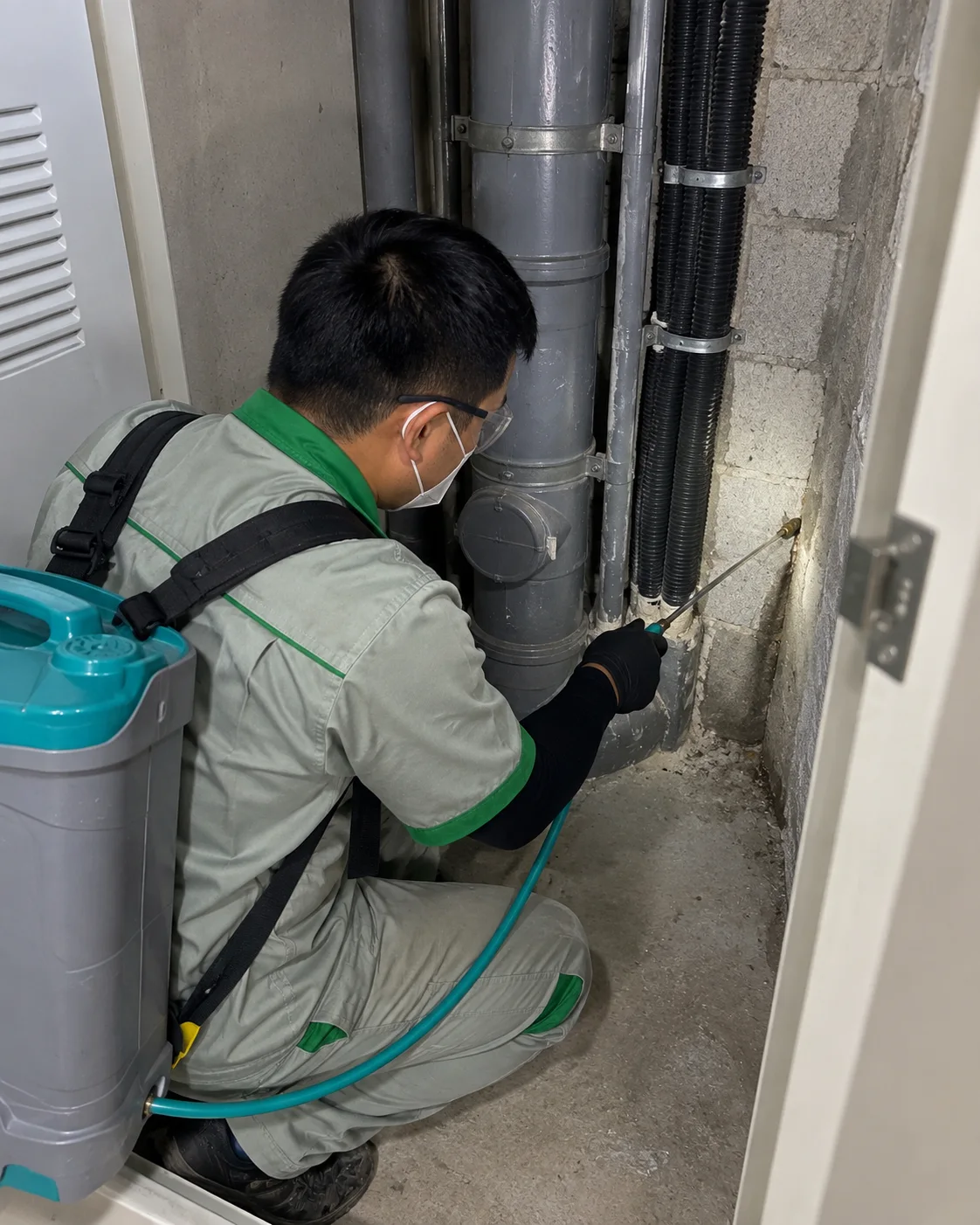
What is not reasonable is a standing deduction applied to every departing tenant regardless of condition, or a charge for treating a problem that originates in the building rather than the unit — a drain-borne cockroach population in a whole stack, for example, or rodents in a service riser.
Why the report matters more than the treatment
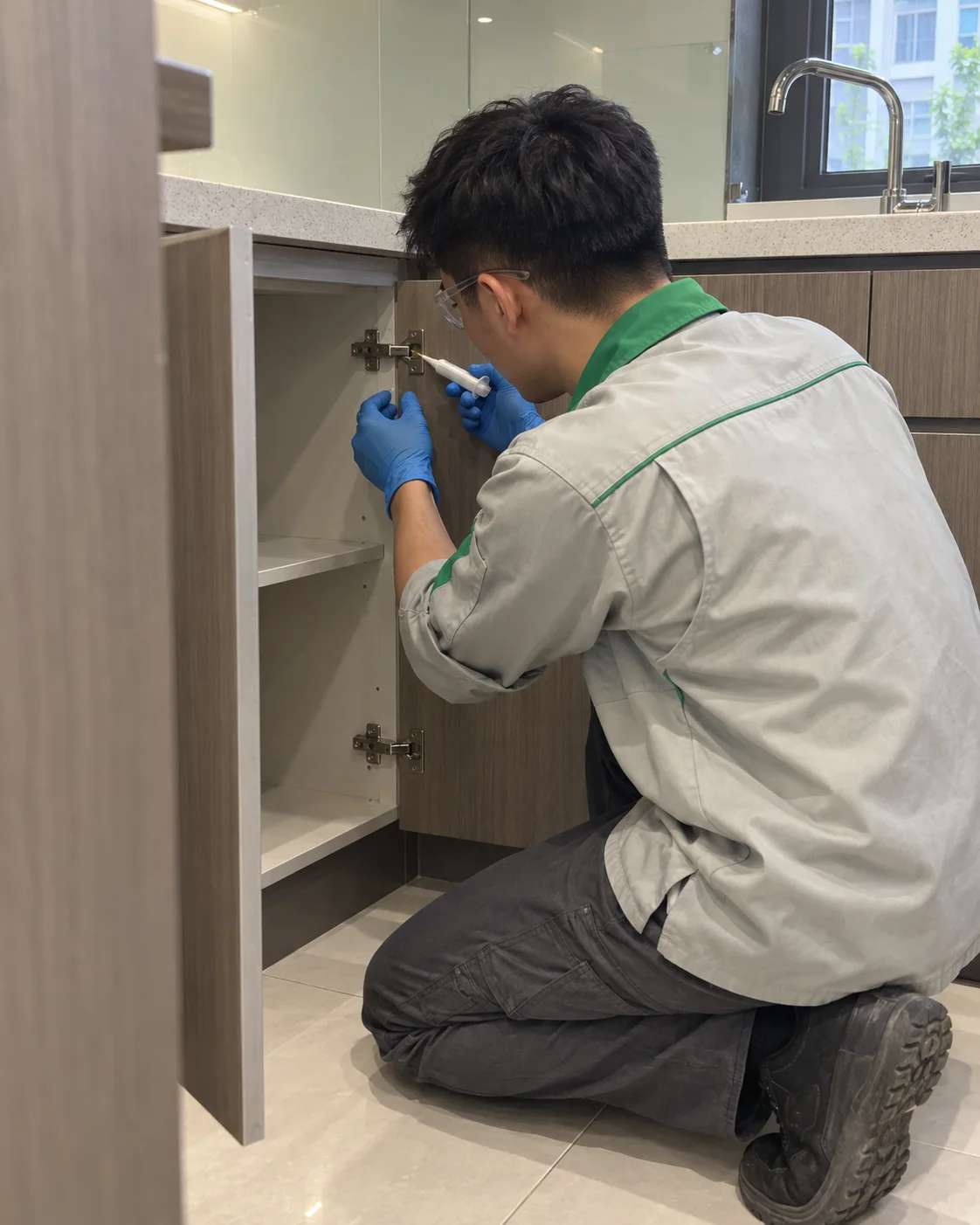
A pest treatment leaves almost no visible trace after a day or two. Gel bait is placed in cracks; residual treatment dries invisible. If you treat and then say so, you are asking to be believed. If you treat and hand over a dated report naming the technician, the products used, the areas treated and the findings, you are handing over evidence.
Ask for the report in a form you can forward. A photograph of a handwritten docket is enough if it carries a date and a company name.
Timing
- Two to three weeks before handover: book the treatment, so there is time for a follow-up if anything is found
- Same day: photograph the kitchen with cabinets open, under the sink, behind the refrigerator, and every floor drain
- One week before: clean behind and under appliances — this is where inspectors look first
- Handover day: bring the report and the photographs, and go through the unit with the landlord or agent present
The three places an inspection will look
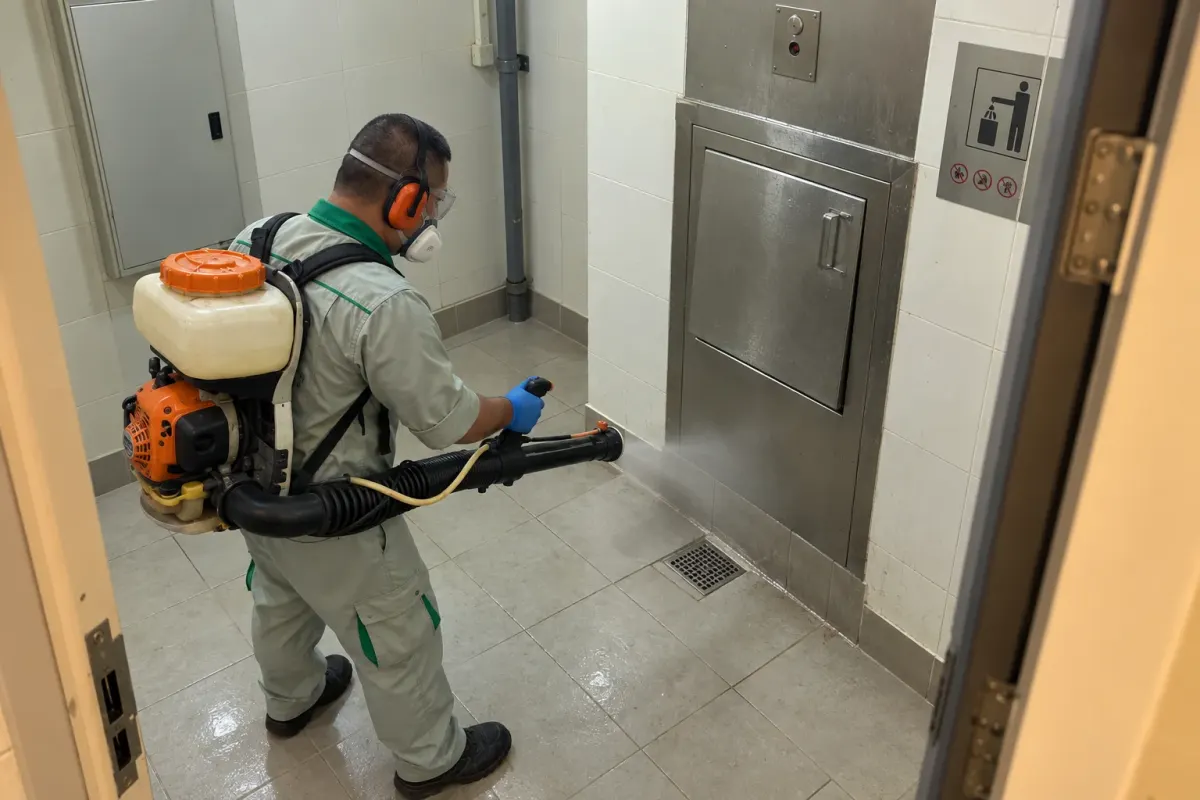
Under the kitchen sink, behind and under the refrigerator, and the floor drains. Those three account for most of what is found at a handover inspection, and all three are things a tenant can clean and photograph in an afternoon.
A fourth, in units with built-in wardrobes, is the interior corners of the wardrobe against an outside wall.
If a deduction is proposed anyway
Ask for the quotation the deduction is based on and the description of what is being treated. A specific quotation for a named problem is a discussion. A round number with no description usually is not.
If the problem is building-wide rather than confined to the unit, say so and point to the evidence — for example, the same species reported by neighbours in the same stack, or activity in the common corridor. Building-wide problems are the management's responsibility in most agreements.
What the agreement usually says, and what it usually means
Most leases in Ho Chi Minh City include a clause requiring the property to be returned clean and in good condition, and many add a line about professional cleaning. Very few name pest control specifically, which is why it becomes a negotiation at the end.
Where the lease is silent, the reasonable position is that a tenant is responsible for a problem that arose from their use, and the landlord for one that is a feature of the building. Establishing which one you have is the whole argument, and it is why the inspection report matters.
Photographs that are actually useful
- Wide shot of the kitchen with all cabinet doors open
- Close shot inside the sink cabinet, including the back corners and pipe penetrations
- Behind and under the refrigerator, with the appliance pulled out
- Each floor drain, with the grille visible
- Any area named in the treatment report, before and after
- A photograph of the report itself, showing the date
Take them on the day of the treatment rather than the day of handover, so the dates align with the report.
If you are the landlord
The same logic works in reverse and is cheaper to run. A treatment and a dated report between tenancies gives you a known starting condition, which means the next handover discussion has a baseline instead of two opinions.
It also protects the unit. Most of the serious problems we see in rental apartments developed slowly across two or three tenancies, with each handover assuming the previous one had dealt with it.
Timing around the final cleaning
Most tenants arrange a professional clean before handover, and the order of the two jobs matters. A deep clean after a treatment removes gel bait and residual product, which means the treatment achieves nothing and the report describes work that no longer exists.
Treat after the clean, not before. If the schedule does not allow it, tell both parties: the cleaners can be asked to leave cabinet interiors, skirting and the backs of appliances alone, and the technician can place bait where cleaning has already finished.
Global Pest Control is the English-language arm of Khử Trùng Toàn Cầu. The same technicians and the same programmes are described on our published price ranges.
Book an inspection
Site inspections are free of charge and carry no obligation. A technician walks the property, identifies the species and the harbourage, and sends a written quotation with the method and the schedule — normally within one working day.
Request an inspection · See indicative prices · All services