Serviced Apartments and Short Lets: Who Handles Pest Control?
In a serviced apartment or a short let, responsibility for pest control normally sits with the operator rather than the guest. They control access, they arrange the cleaning, and they hold the relationship with the building. The difficulty is that short-stay agreements almost never say any of that, so when something appears in week two there is nothing to point at.
Why short lets have a different risk profile
Turnover is the difference. A unit that changes occupants every few weeks receives luggage from a different place each time, and luggage is how bed bugs move. Long-term rentals have this risk once; a short-let unit has it repeatedly.
The cleaning cycle also works against detection. Rooms are cleaned quickly between stays, surfaces are wiped and linen is changed, but the seams of a mattress and the joints of a bed frame are not inspected. Those are exactly the places that matter.
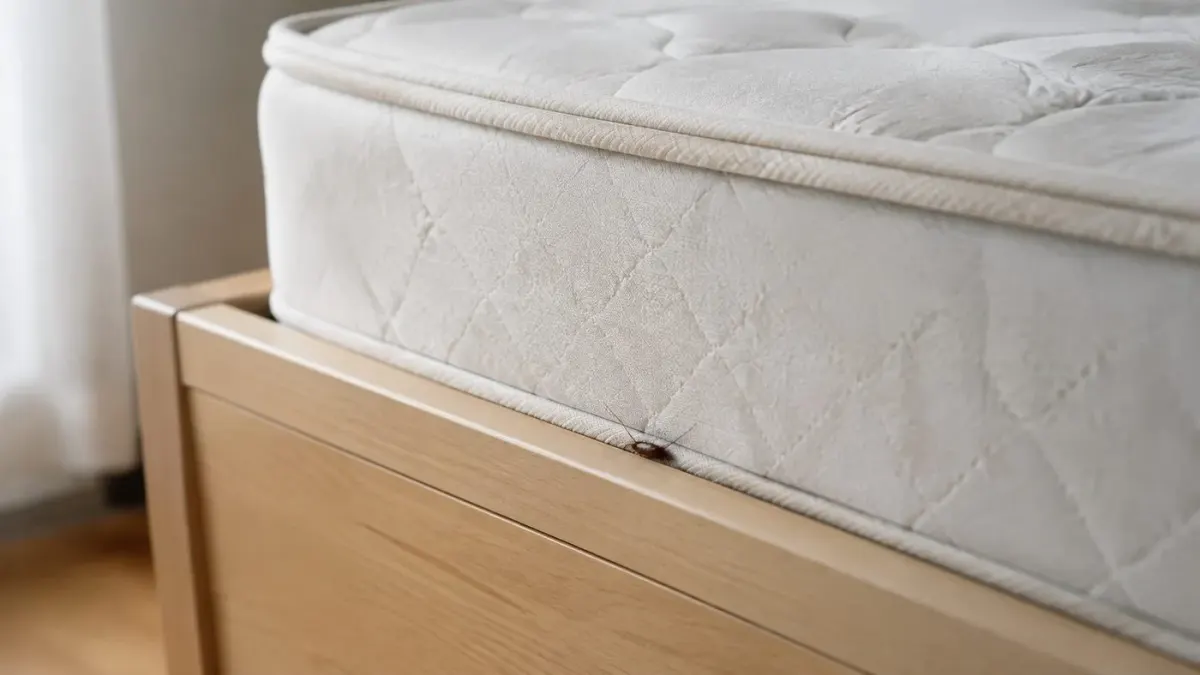
What to check in the first ten minutes of a stay
- Pull back the sheet at the head of the bed and look along the mattress seam and the label
- Look at the joint where the headboard meets the wall, and inside the bed frame joints
- Open the cabinet under the kitchen sink
- Look at the floor drain in the bathroom — is the grille there, does it smell
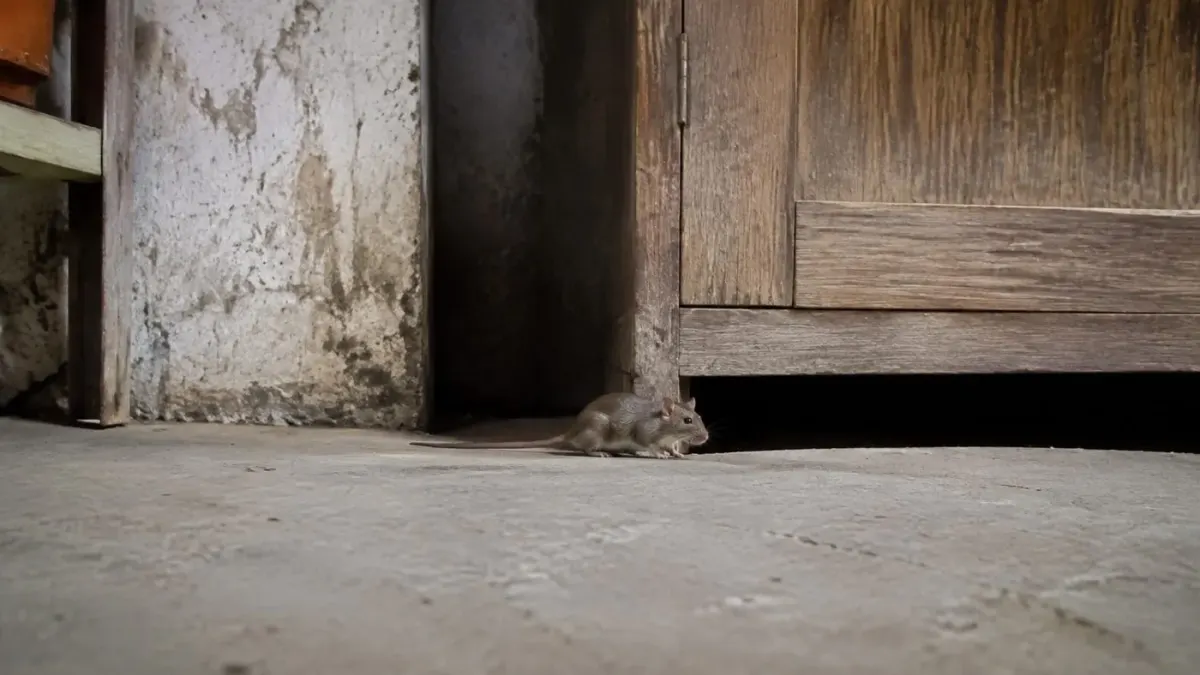
- Check the gap under the entrance door
Small dark spots along a mattress seam, in a line or a cluster, are the classic sign. They are droppings, and they do not wipe off cleanly.
Raising it mid-stay
Report it in writing, with photographs and the time, through the same channel you booked with. A message trail matters more than a phone call, both for getting the room changed and for any refund discussion afterwards.
Ask to be moved to a unit that is not adjacent and preferably on a different floor. Adjacent units in the same stack share the routes that caused the problem.
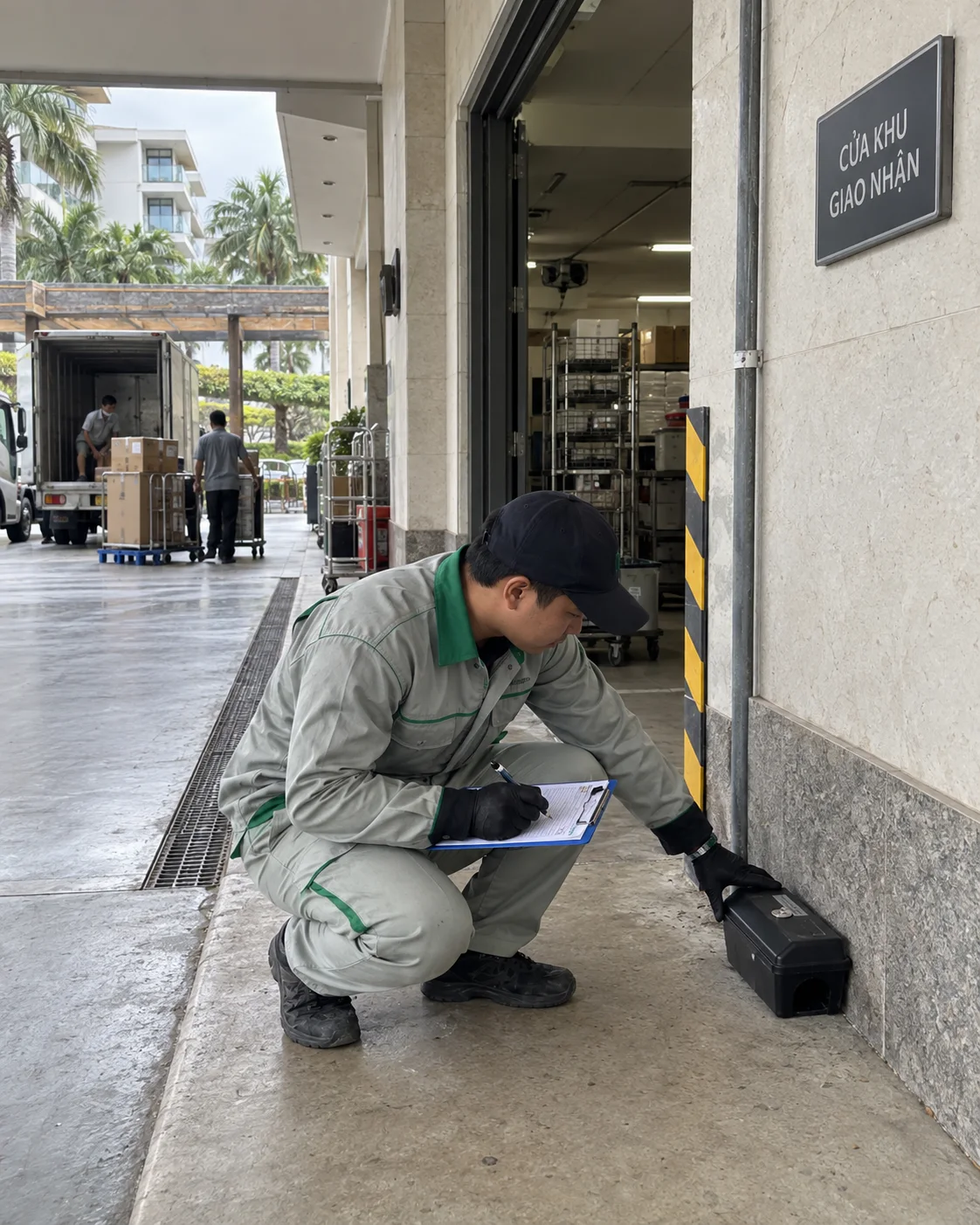
For operators: what a programme should look like
Operators running several units carry a risk that scales with turnover, and the cheapest version of managing it is inspection rather than treatment. A short visual check of beds and bathrooms at each changeover finds problems while they are still confined to one room.
- A written inspection point in the changeover checklist, not just cleaning
- Monitoring traps in the kitchen of each unit, checked monthly
- A standing arrangement with a contractor so a room can be treated within a day rather than a week
- Records kept per unit, so a repeat problem in the same room is visible as a pattern
Do not treat a bed bug problem by moving the guest and doing nothing else
Moving a guest to another room and cleaning the first one is the most common response and the one that spreads the problem. Bed bugs travel in luggage and along shared walls and skirting, so the room next door is the most likely second site.
The room should be taken out of service, treated, and re-inspected after two to three weeks — eggs hatch on that timescale, and a room that looks clear after five days often is not.
What to agree before a long stay
For a stay of a month or more in a serviced apartment, it is worth asking two questions at booking rather than later: does the operator hold a pest control contract, and what is the response time if something is reported.
An operator with a contract will answer immediately. One without will offer to "send someone", which in practice means a call to whoever is available and a spray, which is the treatment least likely to resolve anything.
Luggage discipline for frequent movers
- Keep luggage off the bed and off upholstered furniture; use the rack or a hard surface
- Do not unpack into a wardrobe for a stay of a night or two
- On returning home, unpack in a hard-floored area rather than the bedroom
- Hot wash and hot dry clothing after a stay in a property you were unsure about
- Inspect a suitcase's seams and zip lining occasionally, particularly after hotel stays
None of this is anxious behaviour; it is the same routine that hotel inspectors use, and it takes seconds.
Refunds and what is reasonable
A room change on the same day, and a refund of the affected nights, is a reasonable expectation and what most reputable operators offer without argument. A full refund of an entire stay is a harder ask unless the property could not provide an alternative room.
Keep the message trail, the photographs and the timestamps. Platforms and operators both resolve documented reports quickly and disputed verbal ones slowly.
What a long-stay guest can do themselves
For a stay of several months the unit is effectively your home, and the same simple measures apply: keep the floor drains filled, do not store cardboard, and keep food sealed rather than in opened packets in a cupboard.
Ask the operator to have the kitchen cabinets and the space behind the refrigerator cleaned at the start of the stay rather than only the visible surfaces. It is a reasonable request, it takes the cleaner twenty minutes, and it deals with the residue left by previous guests, which is what feeds anything already present.
Global Pest Control is the English-language arm of Khử Trùng Toàn Cầu. The same technicians and the same programmes are described on our Vietnamese service overview.
Book an inspection
Site inspections are free of charge and carry no obligation. A technician walks the property, identifies the species and the harbourage, and sends a written quotation with the method and the schedule — normally within one working day.
Request an inspection · See indicative prices · All services