Spare Rooms and Storerooms Nobody Opens
Food and water are easy to find in a home. Warmth is guaranteed year-round here. The genuinely scarce resource, from an insect point of view, is somewhere that nobody disturbs — and a spare room, a maid room used for storage, or a storeroom off a service balcony provides exactly that.
This is why problems in these rooms are almost always discovered late, and why they are almost always larger than expected when they are.
Disturbance is the control you did not know you had
A living room floor is walked on, a kitchen counter is wiped, a bedroom is vacuumed. Each of those actions destroys harbourage, breaks pheromone trails, removes food traces and kills individuals, without anyone thinking of it as pest control. A room that is opened twice a year receives none of it.
That means an established population in a spare room has time to reach a size that an equivalent population in a kitchen never reaches, because in a kitchen it would have been noticed and interrupted at a tenth of that size.
What tends to be in these rooms
- Cardboard boxes, which are harbourage, food for silverfish, and moisture absorbers all at once.
- Suitcases, which are the most common way bed bugs enter a home and the least often inspected object in it.
- Old textiles, curtains and bedding, stored soft and stored still.
- Paper, books and documents, which support silverfish and booklice in this humidity.
- Rice, dried goods and pet food bought in bulk and forgotten.
The bulk-buy problem
Storerooms are where a 10 kg sack of rice or a large bag of dog food ends up, and where it stays for months. In this climate stored product pests — rice weevils, pantry moths, flour beetles — establish inside such a sack readily, and because the room is not entered, the first sign is usually moths in an adjacent room rather than anything seen in the store itself.
Decanting bulk dry goods into sealed hard containers on the day they arrive removes this entire category of problem. Not a resealable bag: a rigid container with a gasket lid.
There is a second reason bulk storage causes trouble in these rooms. A sack resting on a tiled floor is cooler than the air above it, so moisture condenses underneath and the underside of the sack stays permanently damp. That is the part nobody sees, and it is the part where an infestation starts.
Making the room inspectable
You do not need to stop using a storeroom. You need to be able to see the floor along all four walls, which usually means shelving rather than stacking, plastic boxes rather than cardboard, and a rule that nothing is stored directly against a wall. Then a torch and two minutes twice a year is a genuine inspection rather than a look at the front of a pile.
A light bulb that works also helps more than it should have to. A surprising number of storerooms in rental apartments have no functioning light, which guarantees that nobody ever looks properly.
The maid room in Vietnamese apartments
Many apartments here have a small room off the kitchen or service balcony intended for domestic staff, which foreign tenants almost always use as storage. These rooms typically have a floor drain, a small window, poor ventilation and a door that stays shut. That is a laundry area and a storeroom combined, and it deserves the checks that apply to both — the drain kept wet, and the contents kept off the floor.
What we find when we open one
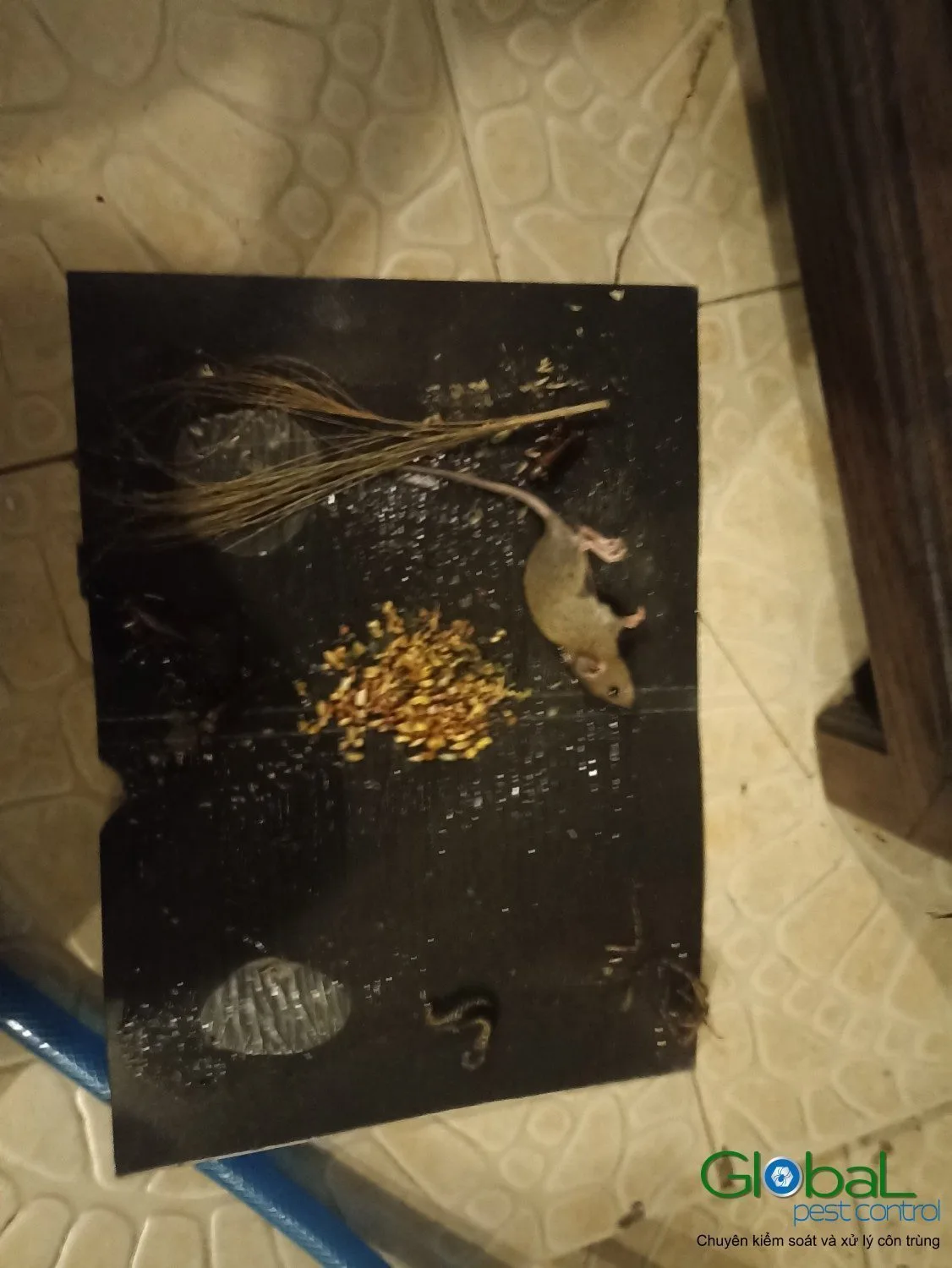
The most common findings, in order: American cockroaches around the floor drain, silverfish in stored paper and cardboard, stored product pests in dry goods, and occasionally rodent evidence where the room adjoins a service riser. Bed bugs turn up in stored suitcases and mattresses more often than anywhere else in a home. None of these are difficult to treat; all of them are easier when they are found at six weeks rather than six months.
Related reading
For fabric and clothing see wardrobes and fabric pests, and for the service room, laundry rooms and utility areas. Dry goods are covered in pantry moths and weevils, and the drain route in bathroom floor traps. The household programme is our apartment programme. Our parent company runs the Vietnamese-language residential programme.
Global Pest Control is the English-language arm of Khử Trùng Toàn Cầu, based in Thu Duc City.
Common questions
How often should I actually open a storeroom?
Once a month is enough to keep it from becoming genuinely undisturbed, and it takes two minutes with a torch. What matters is not deep cleaning but the fact of disturbance — moving boxes, letting light in, breaking the stillness that everything in this article depends on.
Should I treat a storeroom preventively?
Usually not. Treating an empty, dry, well-organised room applies product where nothing is living. The exception is a room with a floor drain that is rarely used, where a drain treatment and keeping the trap wet is worth doing as routine because the route is genuinely open.
I found droppings in the storeroom. How do I know what they are?
Size and shape tell you most of it. Rice-grain sized with pointed ends is mouse; larger and blunter is rat; small dark specks the size of ground pepper, often in a group, is cockroach. Photograph them where they are and send the picture rather than clearing them away — the position is often more informative than the droppings.