Retail Stockrooms and Delivery Doors
A retail unit has two very different halves. The shop floor is lit, watched by staff and customers all day, and cleaned nightly. The stockroom behind it is dim, full of cardboard, rearranged constantly and inspected almost never. Every pest problem a shop reports on the floor originated in the half nobody looks at.
And the stockroom is fed by one opening: the delivery door. That is the only point in the whole operation where you genuinely control what enters the building.
The delivery door as a control point
For most of the working day a retail delivery door is propped open, because propping it open is the only way to move goods with one person. That single habit accounts for more introduced pests than any structural defect in the building. It is also the cheapest thing on this list to change, because the fix is a strip curtain and a rule, not a builder.
A heavy PVC strip curtain lets a trolley through, closes behind it, and cuts flying insect entry substantially. It costs very little and it survives being hit by a cage. The rule that goes with it is simply that the solid door closes between deliveries rather than at the end of the shift.
Four things to check at the door itself
- The bottom seal. A 10 mm gap under a roller shutter is a rodent entrance and a very common finding.
- The immediate outside. Bins, pallets and cardboard stacked against the wall beside the door create a staging post two metres from the opening.
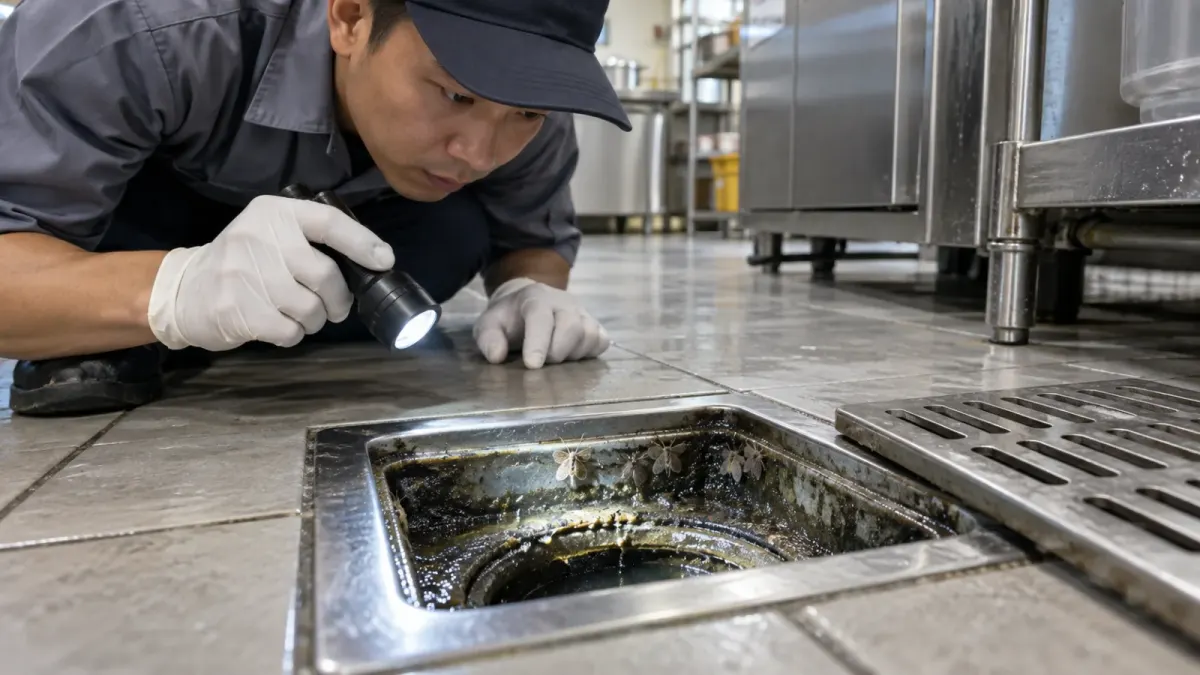
- The drain outside the door. Blocked or unsealed, it is a direct route from the sewer for cockroaches.
- Lighting. A bright light directly over the delivery door draws flying insects to the exact point you are trying to protect. Move it to one side.

Cardboard is the second problem
Cardboard arrives from a warehouse, sits in a corrugated stack against a wall, absorbs humidity, and provides both harbourage and a corridor. In this climate a stack of flattened boxes waiting for collection is one of the most reliable cockroach harbourages in a retail unit, and it is entirely self-inflicted.
The operational answer is to break down and remove packaging the same day rather than accumulating it for a weekly collection, and to keep the baler or the stack away from the wall and off the floor. Where a weekly collection is unavoidable, the stack belongs outside on a hard standing, not inside the stockroom.
Stockroom layout that can be inspected
The single most useful change to a stockroom is a clear inspection lane: a 50 cm gap between racking and the wall on all sides, kept clear as a rule rather than as an aspiration. It looks like wasted space to a store manager under square-metre pressure, and it is the difference between finding droppings in week one and finding a population in month four.
Stock off the floor on racking rather than stacked directly on tiles, oldest stock at the front, and nothing stored permanently in the corner behind the door — those four habits do more than any treatment schedule.
What arrives inside the delivery
Some things cannot be stopped at the door because they come in the box. Pallets that have been standing in a yard, pet food and rice in permeable sacks, and dried goods from a supplier with a weaker programme than yours all carry risk. This is why a goods-in check that takes ninety seconds per delivery is worth writing down and training, rather than relying on whoever happens to be on the door.
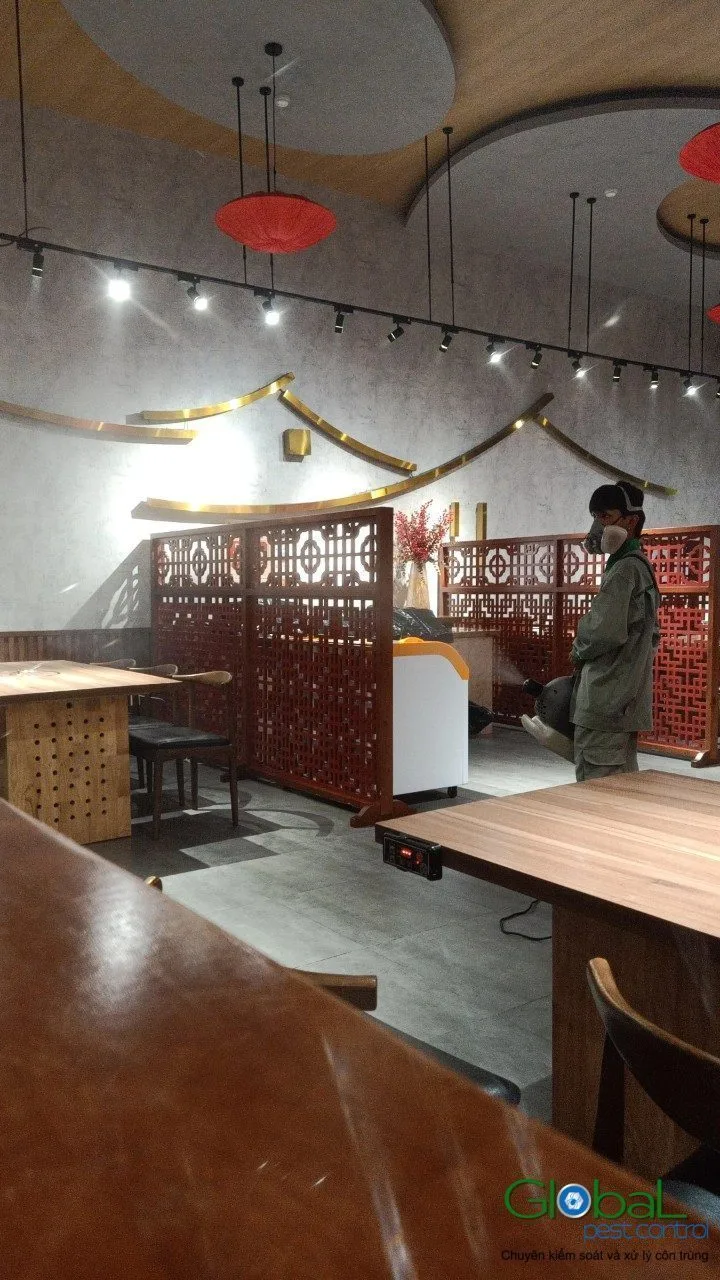
Front of house is a symptom, not a cause
When a customer sees something on the shop floor, the instinct is to treat the shop floor. Almost always the shop floor is the least likely place for a population to live: it is bright, busy, cleaned, and has no water. Treat the stockroom, the bin area and the door, monitor the floor, and the sightings stop. Treat the sightings and they come back in a fortnight.
Related reading
For food retail specifically see supermarkets and food retail and chiller and freezer plinths. The receiving procedure is set out in goods-in inspection, and warehouse practice in pallet management. Our parent company covers the same work in Vietnamese through its warehouse and industrial programme.
Global Pest Control is the English-language arm of Khử Trùng Toàn Cầu, working with international retail brands across Ho Chi Minh City.
Common questions
Do strip curtains really make a difference?
For flying insects, yes, and measurably — it is one of the few low-cost interventions where the effect is visible on insect light trap counts within a month. For rodents they do nothing, because a rodent simply walks through. The two problems need two different fixes at the same doorway.
We rent the unit. Can we change the door?
Adding a strip curtain is almost always within a tenant fit-out allowance and rarely needs landlord consent, because it is not a structural alteration. Replacing a shutter seal usually is a landlord item, but it is also usually a maintenance defect they are already obliged to fix, so it is worth reporting it as a defect rather than as a request.
How often should a stockroom be inspected?
Monthly for a general retail unit, and at every visit for food retail. What matters more than frequency is that the inspection lane exists — a monthly inspection of a stockroom you cannot walk around is a monthly look at the front of a stack.