Bee and Wasp Nests in Ho Chi Minh City: When to Call and How We Treat Them
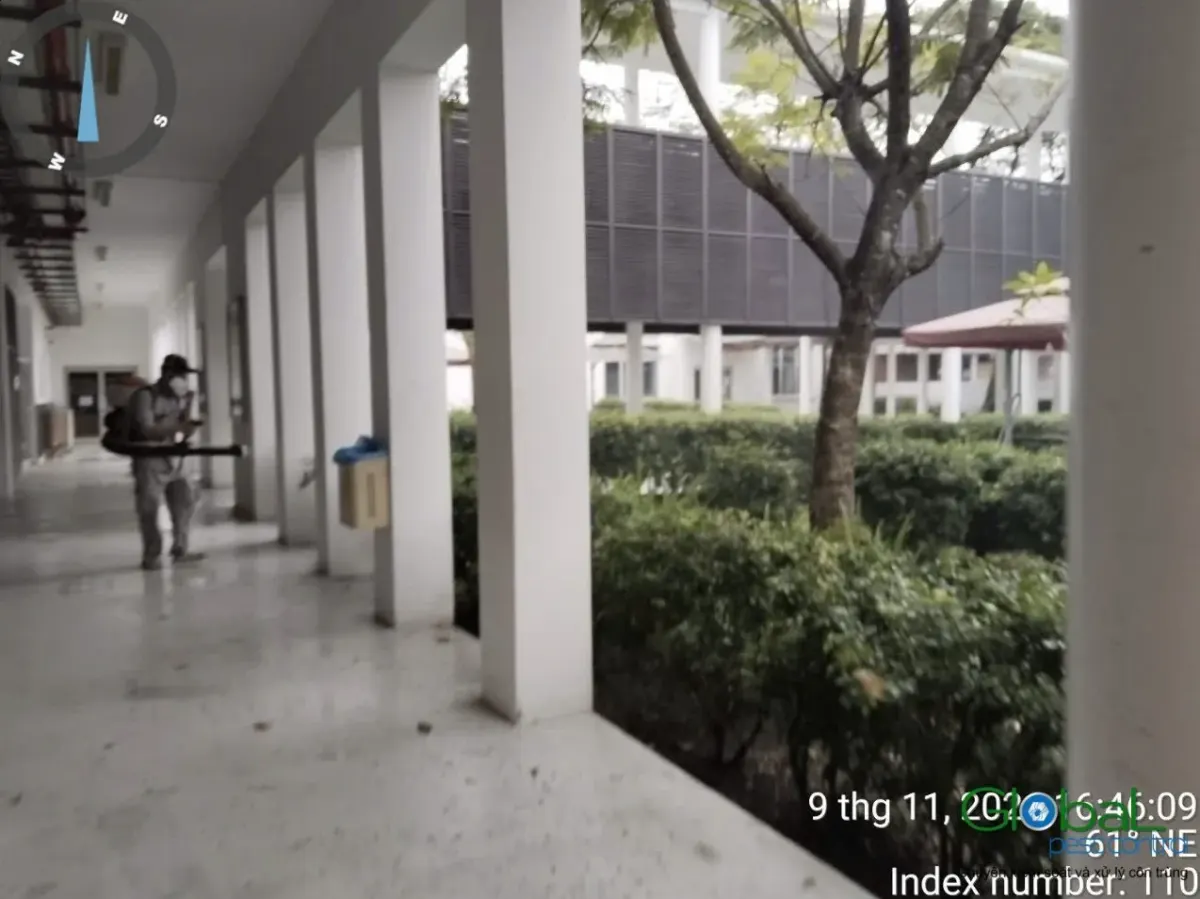
Quick answer. We treat bee, wasp and hornet nests at homes, schools, offices and factories in Ho Chi Minh City. Our technicians wear full protective suits, cordon off at least 10 m around the nest, and mist the whole nest, not only the entrance. We do not relocate colonies. The visit is booked at a time you choose, usually when the bees are back in the nest. Keep people and pets away from the nest until we arrive, and do not try to knock it down or burn it.
Which one do you have?
- Honeybees: brown and furry, about 12 mm. They build open sheets of wax comb under eaves, in trees, or closed combs inside wall cavities, roof spaces and meter boxes. A colony can hold thousands of bees.
- Paper wasps: slim, with long legs that hang down in flight. The nest is a small open umbrella of grey paper cells under roofs, balconies and window frames.
- Hornets and yellowjackets: larger and heavier, with bold yellow or orange bands. They build closed paper nests, often the size of a football or bigger, in trees, shrubs, roof voids or underground. They defend the nest hard and can sting many times.
If you are not sure, a photo taken from a safe distance is enough for us to tell.
When a nest needs treating
A nest far from people can often be left alone. It needs treating when it is:
- next to a door, window, walkway, playground or parking area;
- inside a wall cavity, roof space or electrical box, where bees come indoors;
- at a school, hospital, hotel or factory where many people pass every day;
- in a household with someone allergic to stings.
How we treat the nest
- Look first: where the nest is, how big it is, which species, and where people and pets pass.
- Cordon: we mark off at least 10 m around the nest and ask everyone to stay indoors with windows closed on that side.
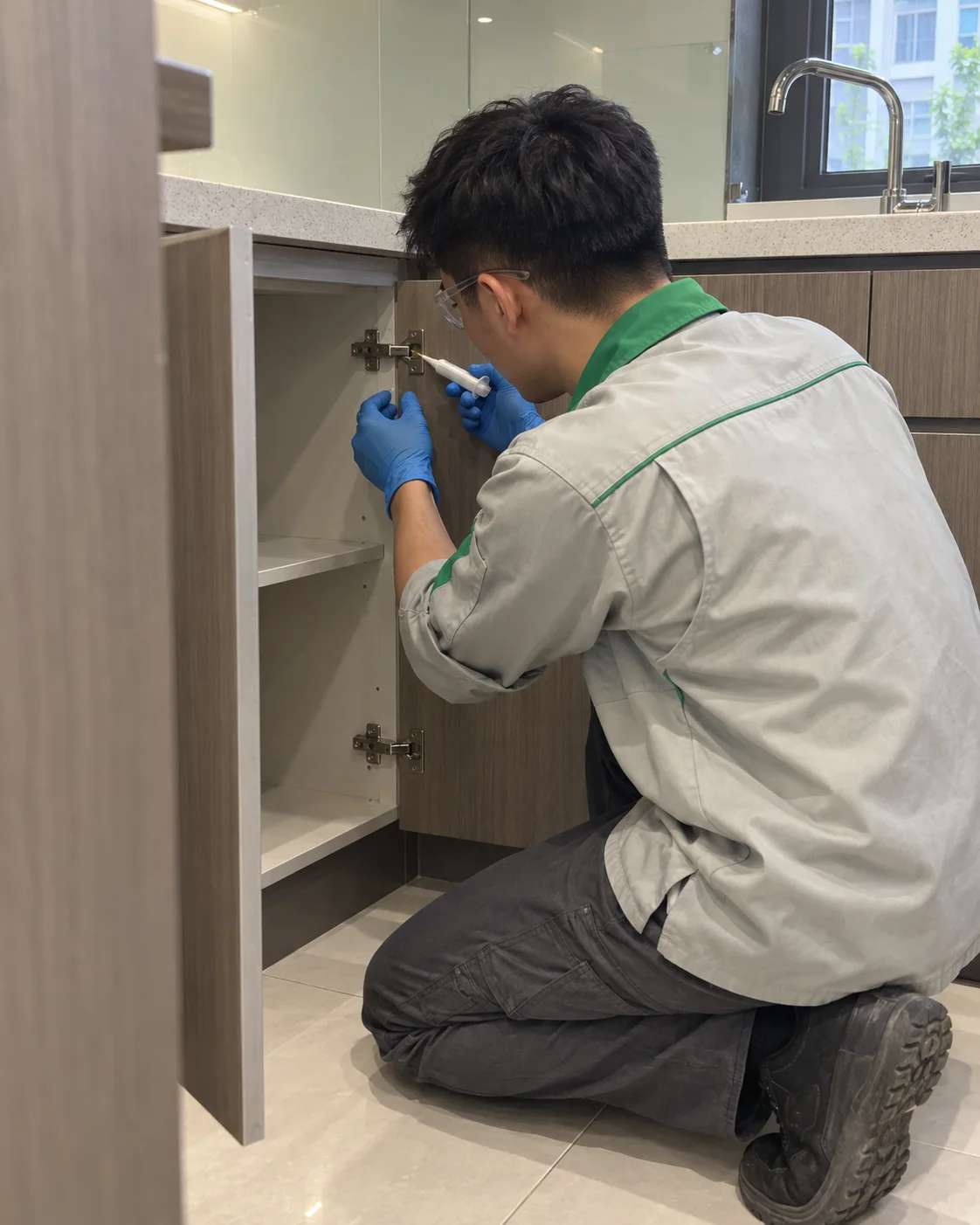
- Protective suits: every technician near the nest wears a full bee suit, gloves and a veil.
- Mist the whole nest: we spray a fine mist over the whole nest and the bees on it, not just the entrance, so the colony does not scatter and rebuild nearby.
- Remove what we can reach: open combs and paper nests within safe reach are taken down afterwards. For nests inside walls or roofs, we tell you which opening to close so a new swarm does not move in.
- Check: returning foragers can hang around the spot for a day or two. If a nest is still active after the visit, tell us and we come back to check.
We do not drill into walls to reach a nest, and we do not relocate colonies.
Timing
We work at the time you book. Where you can choose, we suggest a time when the bees are back in the nest, because the whole colony is then treated together. For schools, offices and factories we can work outside your hours.
What to do before we arrive
- Keep children and pets away from the area, and close windows on that side of the building.
- Do not spray household insecticide, throw water, or try to burn the nest; this makes the colony attack.
- If someone is stung, remove the sting by scraping it sideways, wash the area and apply a cold pack. Get medical help at once for swelling of the face or throat, difficulty breathing or dizziness.
For businesses
Schools, resorts, factories and warehouses with trees and large roofs often see new nests in the dry season. Ask staff to report a small nest as soon as they see one: a nest the size of a fist is quicker to treat, and fewer people are at risk than with one the size of a football.
Common questions
Can you move the bees instead of killing them?
We do not relocate colonies. If you want the bees kept, a local beekeeper may be able to collect a swarm that has not yet built comb.
How much does it cost?
It depends on the species, the height and whether the nest is inside a structure. Starting prices are on the price list.
Will they come back?
A new swarm can pick the same sheltered spot, especially a wall or roof opening. Closing that opening is the best prevention.